Wire mesh machine guarding stands out as one of the most practical and compliant solutions for protecting workers in UK industrial environments. Governed primarily by the Provision and Use of Work Equipment Regulations 1998 (PUWER), which requires effective measures to prevent access to dangerous parts of machinery (with fixed guards preferred where practicable), wire mesh offers a balanced approach that meets HSE guidelines while delivering real-world usability.
Unlike solid panels that can obscure views or trap heat, wire mesh combines robust physical protection with visibility, ventilation, and cost-efficiency. It's widely used across manufacturing, warehousing, automation, and processing sectors.
Key Advantages of Wire Mesh for Machine Guarding
Wire mesh (often welded or woven from galvanised or stainless steel) outperforms alternatives like solid sheet metal, plastic, or full enclosures in several ways:
Excellent visibility — Operators and supervisors can clearly monitor processes, spot issues early, and perform visual inspections without removing guards.
Superior ventilation and airflow — Prevents overheating of motors, electronics, or processes, reducing downtime and fire risks.
High strength and durability — Withstands impacts, resists corrosion in industrial settings, and lasts longer than many alternatives.
Lightweight and modular — Easier (and cheaper) to install, reconfigure, or relocate compared to heavy solid barriers.
Cost-effective — Lower material and installation costs, plus reduced maintenance.
Reliability — No dependence on power or electronics (unlike light curtains), so protection remains constant.
These features align well with PUWER's hierarchy of controls, especially for fixed or perimeter guarding where routine access isn't needed but monitoring is essential.
Best Uses for Wire Mesh Machine Guarding in the UK
Here are the most effective and common applications, drawn from typical UK industrial practices:
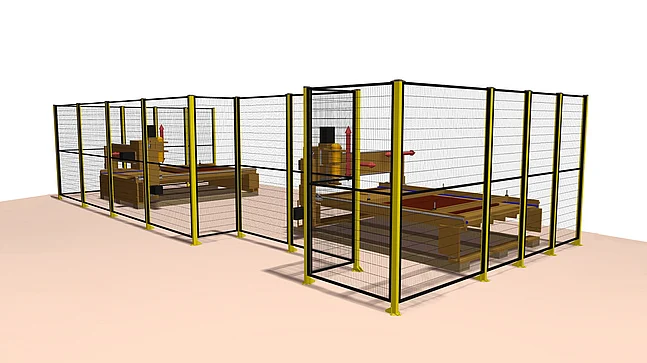
Robotic Cells and Automated Systems Wire mesh enclosures create secure perimeters around robotic arms, pick-and-place systems, or automated assembly lines. Workers can safely observe operations while protected from fast-moving parts. Ideal for automotive, electronics, and packaging plants.
Conveyor Belts and Material Handling Equipment Guards along conveyors prevent access to nip points, rollers, or pinch hazards. Mesh allows clear views for jam detection or maintenance checks while catching stray items or debris.
Presses, Punching, Stamping, and Press Brake Stations Protects against flying debris, crush injuries, or moving tools in metal forming. The mesh acts as a barrier and "net" for ejected parts, common in fabrication and sheet metal workshops.
Laser Cutting, Grinding, and Welding Areas Shields operators from sparks, UV light, flying particles, or high-energy beams while allowing airflow to extract fumes and prevent heat buildup.
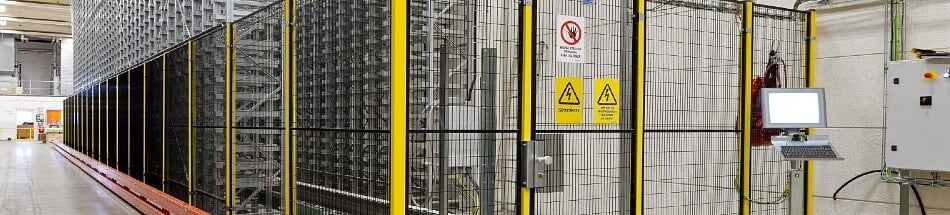
Perimeter Guarding and Large Machine Enclosures Forms fences or full cages around groups of machinery (e.g., production lines or hazardous zones). This isolates risks without fully blocking access for authorised personnel—perfect for warehouses, factories, or areas with high-voltage equipment.
General Factory Floor Protection Around cutting, crushing, or grinding machines where visibility is key for process control but full enclosure would hinder cooling or observation.
In all cases, mesh aperture sizes must comply with PUWER and related standards (e.g., not allowing finger access to danger zones, typically following ISO 13857 for safety distances).
Why Wire Mesh Excels in UK Compliance and Practicality
Under PUWER Regulation 11, guards must prevent access to dangerous parts effectively. Wire mesh satisfies this as a fixed guard (when properly secured) or part of an interlocked system. HSE guidance emphasises that guards should allow necessary visibility and not create new hazards—mesh delivers here better than opaque alternatives.
Many UK suppliers offer modular systems that integrate doors, interlocks, or quick-release panels for maintenance, ensuring ongoing compliance through easy inspections.
Final Thoughts
Wire mesh machine guarding is often the best overall choice in the UK when you need strong protection without sacrificing visibility, airflow, or flexibility. It reduces accident risks, supports productivity, and helps demonstrate due diligence under PUWER and HSE expectations.
If you're assessing your current setup, conduct a risk assessment (as required by PUWER) and consider consulting a specialist for custom solutions. Prioritising effective guarding isn't just a legal obligation—it's a smart investment in worker safety and operational efficiency.
See our Machine Guarding product page or contact us for further information.